“Is this psoriasis or something else?”
If you’ve noticed unusual patches on your skin and you’re confused about whether it’s lichen planus or psoriasis, you’re not alone. These two inflammatory skin conditions share some similarities that often lead to misdiagnosis, delayed treatment, and unnecessary anxiety.
At Psoriasis Treatment Bangalore, we’ve treated thousands of patients—and one of the most common questions we hear during consultations is: “How do I know if this is psoriasis or lichen planus?”
This comprehensive guide will help you understand the crucial differences between these two conditions, their unique characteristics, and most importantly, how to get the right diagnosis and treatment.
In this article, you’ll discover:
- The fundamental differences between lichen planus and psoriasis
- How to identify each condition by appearance and location
- What causes these skin disorders
- Treatment options for both conditions
- When to see a specialist
Let’s dive deep into understanding these two distinct skin conditions.
What is Psoriasis?
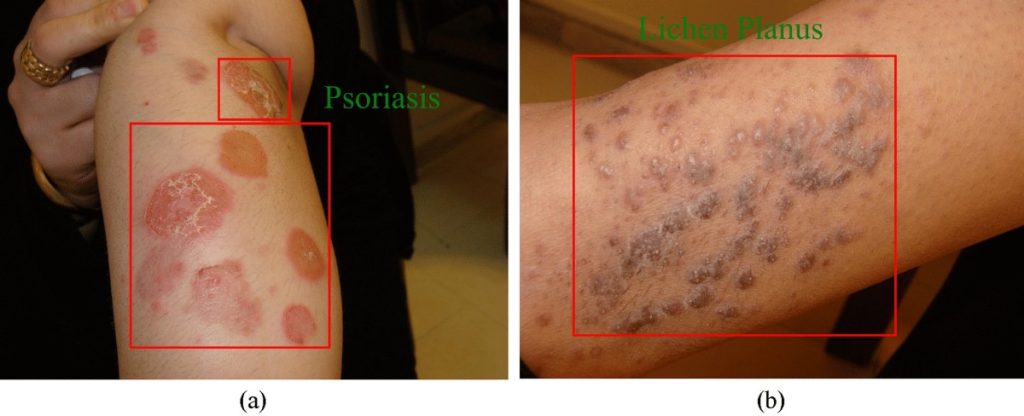
Psoriasis is a chronic autoimmune condition characterized by rapid skin cell turnover, leading to thick, scaly patches on the skin. Instead of the normal 28-day skin cell cycle, psoriasis causes cells to rise to the surface in just 3-4 days.
Key Characteristics of Psoriasis:
Appearance:
- Raised, red patches covered with silvery-white scales
- Well-defined borders
- Scales that flake off easily
- Can appear shiny after scales are removed
- May bleed slightly when scales are picked off (Auspitz sign)
Common Locations:
- Elbows and knees (extensor surfaces)
- Scalp
- Lower back
- Palms and soles
- Nails
- Can appear anywhere on the body
Symptoms:
- Itching (mild to severe)
- Burning sensation
- Dry, cracked skin that may bleed
- Thickened or pitted nails
- Joint pain (in psoriatic arthritis)
Types of Psoriasis:
- Plaque Psoriasis (most common – 80-90% of cases)
- Guttate Psoriasis (small, drop-like lesions)
- Inverse Psoriasis (smooth red patches in skin folds)
- Pustular Psoriasis (white pustules surrounded by red skin)
- Erythrodermic Psoriasis (severe, widespread redness)
Prevalence: Affects approximately 2-3% of the global population, with men and women equally affected.
What is Lichen Planus?
Lichen planus is an inflammatory condition that affects the skin, mucous membranes, hair, and nails. Unlike psoriasis, it’s not classified as an autoimmune disease but rather as an immune-mediated disorder.
Key Characteristics of Lichen Planus:
Appearance:
- Flat-topped, purple to violaceous bumps (papules)
- Shiny surface with fine white lines (Wickham’s striae)
- Polygonal (angular) shape
- Usually grouped together
- May have a lacy white pattern, especially in the mouth
Common Locations:
- Inner wrists and forearms (flexor surfaces)
- Lower legs and ankles
- Mouth (oral mucosa)
- Genitals
- Scalp (can cause permanent hair loss)
- Nails
Symptoms:
- Intense itching (often severe)
- Painful lesions (especially in the mouth)
- Burning sensation in oral lesions
- Sensitivity to hot or spicy foods (oral lichen planus)
- Nail changes including ridging, thinning, or loss
Types of Lichen Planus:
- Cutaneous (Skin) Lichen Planus
- Oral Lichen Planus (affects inside of mouth, most common)
- Lichen Planopilaris (affects scalp, causing hair loss)
- Genital Lichen Planus
- Nail Lichen Planus
Prevalence: Affects 0.5-2% of the population, more common in middle-aged adults (30-60 years).
Lichen Planus vs Psoriasis: Key Differences at a Glance
| Feature | Psoriasis | Lichen Planus |
|---|---|---|
| Appearance | Raised, red plaques with silvery scales | Flat-topped, purple papules with white lines |
| Texture | Thick, scaly | Shiny, smooth or slightly scaly |
| Border | Well-defined, clear | Less defined |
| Color | Red to pink with white/silver scales | Purple, violet, or reddish-purple |
| Shape | Irregular, round or oval | Polygonal (angular) |
| Scale | Thick, prominent silvery scales | Minimal to no scales; fine white lines |
| Common Sites | Elbows, knees, scalp (extensors) | Wrists, ankles, mouth (flexors) |
| Mucous Membranes | Rare | Common (especially mouth) |
| Itching | Variable (mild to moderate) | Intense and persistent |
| Nail Changes | Pitting, thickening, separation | Ridging, thinning, loss |
| Duration | Chronic, lifelong | Often self-limiting (1-2 years) |
| Age of Onset | Any age, peaks at 15-35 and 50-60 | Usually 30-60 years |
| Cause | Autoimmune disorder | Immune-mediated, often triggered |
| Contagious | No | No |
Visual Identification Guide
How to Spot Psoriasis:
The “6 Ps” of Psoriasis:
- Plaques – Raised patches
- Pink/Red – Base color
- Prominent scales – Silvery-white
- Picked scales – Reveal shiny surface underneath
- Pinpoint bleeding – When scales removed (Auspitz sign)
- Persistent – Chronic condition
Look for:
- Symmetrical distribution (both elbows, both knees)
- Koebner phenomenon (new lesions at sites of injury)
- Scalp involvement with thick scales
- Nail changes (pitting, oil spots)
How to Spot Lichen Planus:
The “6 Ps” of Lichen Planus:
- Purple/Violaceous color
- Polygonal shape
- Planar (flat-topped)
- Pruritic (very itchy)
- Papules and plaques
- Pattern – Often linear (Koebner phenomenon also occurs)
Look for:
- Wickham’s striae (fine white lines on surface)
- Wrist and ankle involvement
- White lacy pattern in mouth
- Grouped lesions
- Post-inflammatory hyperpigmentation (dark marks after healing)
Causes and Risk Factors
What Causes Psoriasis?
Psoriasis is an autoimmune condition where the immune system mistakenly attacks healthy skin cells.
Primary Causes:
- Genetic predisposition (30-40% have a family history)
- Immune system dysfunction (overactive T-cells)
- Environmental triggers
Common Triggers:
- Infections (especially strep throat for guttate psoriasis)
- Stress and anxiety
- Skin injuries (cuts, burns, insect bites)
- Cold, dry weather
- Smoking and alcohol consumption
- Certain medications (lithium, beta-blockers, antimalarials)
- Obesity
- Vitamin D deficiency
Risk Factors:
- Family history of psoriasis
- Viral or bacterial infections
- High stress levels
- Smoking
- Obesity
- Other autoimmune conditions
What Causes Lichen Planus?
The exact cause of lichen planus is unknown, but it’s believed to be an abnormal immune response where the body attacks its own skin or mucous membrane cells.
Possible Triggers:
- Hepatitis C infection (strong association)
- Medications:
- Antimalarials (quinidine, chloroquine)
- Diuretics (thiazides, furosemide)
- Beta-blockers
- NSAIDs
- ACE inhibitors
- Gold compounds
- Penicillamine
- Dental materials (mercury amalgam fillings)
- Vaccines (rare cases)
- Allergens (metals, chemicals)
- Stress (may worsen condition)
Risk Factors:
- Middle age (30-60 years)
- Hepatitis C infection
- Certain medications
- Contact with chemical allergens
- Autoimmune conditions
- Family history (less common than psoriasis)
Important Note: Unlike psoriasis, lichen planus is NOT considered a truly autoimmune disease, though the immune system is involved.
Diagnosis: How Doctors Tell Them Apart
Clinical Examination
For Psoriasis:
- Visual inspection of skin lesions
- Auspitz sign test – Gently scraping scales reveals pinpoint bleeding
- Koebner phenomenon – History of lesions at injury sites
- Nail examination – Look for pitting, oil spots, onycholysis
- Joint assessment – Check for psoriatic arthritis signs
- Family history inquiry
For Lichen Planus:
- Visual inspection of skin and mucous membranes
- Wickham’s striae identification – Fine white lines
- Oral examination – Check inside mouth for white patches
- Dermoscopy – Magnified view shows white lines clearly
- Medication history review
- Hepatitis C screening recommended
Skin Biopsy
When visual diagnosis is unclear, a skin biopsy provides definitive answers.
Psoriasis Biopsy Shows:
- Regular elongation of rete ridges (epidermal projections)
- Increased thickness of epidermis (acanthosis)
- Parakeratosis (retention of nuclei in stratum corneum)
- Dilated blood vessels in dermis
- Inflammatory cells (T-lymphocytes, neutrophils)
- Munro microabscesses (neutrophils in stratum corneum)
Lichen Planus Biopsy Shows:
- Wedge-shaped thickening of epidermis
- Liquefaction degeneration of basal layer
- Band-like lymphocytic infiltrate at dermal-epidermal junction
- Civatte bodies (apoptotic keratinocytes)
- Saw-tooth appearance of rete ridges
- Max Joseph spaces (clefts at dermal-epidermal junction)
Laboratory Tests
For Psoriasis:
- Usually not needed for diagnosis
- May check for strep infection if guttate psoriasis suspected
- Blood tests if systemic therapy planned
- Rheumatoid factor and anti-CCP if psoriatic arthritis suspected
For Lichen Planus:
- Hepatitis C screening (strong association)
- Hepatitis B screening
- Liver function tests
- Patch testing (if allergic contact dermatitis suspected)
- Direct immunofluorescence (to rule out autoimmune blistering diseases)
Treatment Options
Psoriasis Treatment
Ayurvedic Approach (Our Specialty at Psoriasis Treatment Bangalore):
Panchakarma Therapy:
- Virechana (therapeutic purgation) – Eliminates toxins
- Vamana (therapeutic emesis) – In selected cases
- Basti (medicated enemas) – For chronic cases
- Raktamokshana (bloodletting) – In specific situations
Internal Medications:
- Herbal formulations to balance doshas
- Immunomodulatory herbs
- Blood purifiers (Rakta shodhaka)
- Digestive enhancers
External Applications:
- Medicated oils (Taila)
- Herbal pastes (Lepa)
- Medicated baths (Parisheka)
Dietary Modifications:
- Anti-inflammatory diet
- Avoidance of trigger foods
- Emphasis on fresh, sattvic foods
Lifestyle Guidance:
- Stress management techniques
- Yoga and meditation
- Sleep hygiene
- Exercise recommendations
Treatment Duration: 3-6 months for significant improvement; maintenance therapy ongoing
Success Rate: 85-90% significant improvement with Ayurvedic treatment at our center
Conventional Treatment Options:
Topical Treatments:
- Corticosteroids (various strengths)
- Vitamin D analogues (calcipotriol)
- Retinoids (tazarotene)
- Calcineurin inhibitors (tacrolimus, pimecrolimus)
- Coal tar preparations
- Salicylic acid (keratolytic)
Phototherapy:
- UVB phototherapy (narrowband UVB most effective)
- PUVA (psoralen plus UVA)
- Excimer laser
Systemic Medications:
- Methotrexate
- Cyclosporine
- Acitretin (retinoid)
- Apremilast (PDE4 inhibitor)
Biologics:
- TNF-alpha inhibitors (adalimumab, etanercept, infliximab)
- IL-17 inhibitors (secukinumab, ixekizumab)
- IL-23 inhibitors (guselkumab, risankizumab)
- IL-12/23 inhibitors (ustekinumab)
Note: Conventional treatments often have side effects and require long-term use. Ayurvedic treatment offers a safer, holistic alternative.
Lichen Planus Treatment
Ayurvedic Approach:
Internal Medications:
- Pitta-pacifying herbs (cooling herbs)
- Blood purifiers (Rakta shodhaka dravya)
- Immunomodulators
- Liver-supporting herbs (especially if hepatitis C associated)
External Applications:
- Cooling oils and pastes
- Anti-inflammatory preparations
- Wound healing applications (for oral lesions)
Oral Lichen Planus Specific:
- Herbal mouth rinses
- Glycerine-based applications
- Oil pulling (Gandusha)
Dietary Modifications:
- Avoid hot, spicy, acidic foods
- Cooling foods emphasized
- Anti-inflammatory diet
- Avoid trigger foods
Treatment Duration: Often self-limiting; Ayurvedic treatment can reduce duration to 6-12 months
Conventional Treatment Options:
Topical Treatments:
- Corticosteroids (high-potency for skin, lower-potency for oral)
- Tacrolimus ointment
- Retinoids
- Calcineurin inhibitors
For Oral Lichen Planus:
- Corticosteroid gels or rinses
- Tacrolimus oral rinse
- Lidocaine rinses (for pain)
- Good oral hygiene
Systemic Medications (Severe Cases):
- Oral corticosteroids (short-term)
- Hydroxychloroquine
- Methotrexate
- Cyclosporine
- Retinoids (acitretin)
Phototherapy:
- PUVA therapy
- UVB phototherapy (less effective than for psoriasis)
Important: If medication-induced, stopping the offending drug usually resolves the condition within weeks to months.
Living With Psoriasis vs Lichen Planus
Psoriasis: Long-Term Management
Prognosis:
- Chronic, lifelong condition
- Waxes and wanes with flare-ups and remissions
- Can be well-controlled with proper treatment
- 20-30% may develop psoriatic arthritis
Lifestyle Adaptations:
- Maintain healthy weight
- Avoid smoking and alcohol
- Manage stress effectively
- Regular moisturization
- Sun exposure (moderate, supervised)
- Avoid skin injuries
- Stay hydrated
- Follow prescribed treatment consistently
Complications to Monitor:
- Psoriatic arthritis
- Cardiovascular disease (increased risk)
- Metabolic syndrome
- Depression and anxiety
- Social isolation
Quality of Life Impact:
- Can significantly affect self-esteem
- May impact career choices
- Requires ongoing treatment
- Support groups beneficial
- Education about condition crucial
Lichen Planus: Typically Self-Limiting
Prognosis:
- Often resolves spontaneously in 1-2 years (cutaneous form)
- Oral lichen planus may persist for years
- Recurrence possible (10-20% of cases)
- Rarely becomes chronic
Lifestyle Adaptations:
- Good oral hygiene (for oral LP)
- Avoid spicy, acidic, hot foods (oral LP)
- Stress management
- Avoid identified triggers
- Regular dental check-ups (oral LP)
- Gentle skin care
Complications to Monitor:
- Oral lichen planus: 1-3% risk of squamous cell carcinoma
- Scalp involvement: permanent hair loss (scarring alopecia)
- Genital involvement: scarring, adhesions
- Post-inflammatory hyperpigmentation
- Nail loss or scarring
Quality of Life Impact:
- Intense itching can be debilitating
- Oral lesions can affect eating and speaking
- May cause anxiety during active phase
- Generally less long-term impact than psoriasis
- Emotional relief when condition resolves
Can You Have Both Conditions?
Yes, though rare, a person can have both psoriasis and lichen planus simultaneously or at different times. This is called “overlap syndrome” or concurrent presentation.
Why This Happens:
- Both involve immune system dysfunction
- Shared genetic susceptibility markers
- Common environmental triggers
- Koebner phenomenon in both conditions
Diagnosis Challenge:
- Requires careful clinical examination
- May need multiple biopsies
- Dermoscopy helpful
- Treatment must address both conditions
Treatment Approach:
- Requires expert dermatologist/Ayurvedic consultation
- Combination therapy may be needed
- Regular monitoring essential
- Individualized treatment plan
When to See a Doctor
Seek Medical Attention If:
For Suspected Psoriasis:
- Persistent red, scaly patches lasting more than 2 weeks
- Severe itching or burning
- Skin cracks and bleeds
- Patches covering large body areas
- Joint pain, stiffness, or swelling
- Condition impacts daily activities or mental health
- Over-the-counter treatments ineffective
For Suspected Lichen Planus:
- Intensely itchy purple bumps on skin
- Painful white patches in mouth lasting over 2 weeks
- Difficulty eating or drinking due to mouth lesions
- White patches in genital area
- Progressive hair loss on scalp
- Nail changes (ridging, thinning, loss)
- Suspected medication-induced rash
Emergency Care Needed If:
- Sudden widespread redness covering most of body (erythrodermic psoriasis)
- Severe blistering or pustules with fever
- Significant difficulty swallowing (severe oral lichen planus)
- Signs of infection (increased pain, warmth, pus, fever)
- Severe joint pain with fever (septic arthritis possibility)
Why Choose Ayurvedic Treatment?
At Psoriasis Treatment Bangalore, we’ve successfully treated over 1,000 patients with psoriasis and various other skin conditions including lichen planus using authentic Ayurvedic protocols.
Advantages of Ayurvedic Treatment:
For Psoriasis:
- ✅ Treats root cause, not just symptoms
- ✅ No steroids or immunosuppressants – eliminates side effect concerns ✅ Lasting results – 85-90% patients maintain improvement long-term
- ✅ Holistic approach – addresses physical, mental, and emotional health
- ✅ Personalized treatment – customized to your unique constitution (Prakriti)
- ✅ Safe long-term use – herbal medicines without toxicity
- ✅ Improves overall health – bonus benefits beyond skin improvement
- ✅ Reduces recurrence – addresses underlying imbalances
For Lichen Planus: ✅ Reduces duration – speeds up natural resolution ✅ Controls intense itching effectively ✅ Prevents scarring – especially important for scalp and genital LP ✅ Safe for oral lesions – herbal preparations well-tolerated ✅ No long-term side effects ✅ Supports liver health – important if hepatitis C associated ✅ Addresses underlying triggers
Our Success Story:
Patient Testimonial: “I was diagnosed with severe plaque psoriasis 15 years ago. After trying countless treatments with temporary results, I found Dr. Chaithanya. His Ayurvedic approach transformed my life. Within 4 months, my skin was 90% clear. Five years later, I remain mostly clear with minimal maintenance. This isn’t just treatment—it’s a new life.” — Rajesh, 45, Bangalore
Can lichen planus turn into psoriasis or vice versa?
No, these are distinct conditions that don’t transform into each other. However, a person can develop both conditions separately at different times, though this is uncommon.
Which condition is more serious?
Both can significantly impact quality of life. Psoriasis is chronic and associated with systemic complications like arthritis and cardiovascular disease. Lichen planus, especially oral type, has a small cancer risk (1-3%) but often resolves on its own.
Conclusion: Getting the Right Diagnosis is Critical
Distinguishing between lichen planus and psoriasis is more than an academic exercise—it’s essential for effective treatment and management. While both are inflammatory skin conditions that can significantly impact quality of life, they differ in:
- Appearance and location
- Underlying causes
- Treatment approaches
- Long-term prognosis
- Associated complications
Key Takeaways:
🔹 Psoriasis presents as raised, red plaques with silvery scales, primarily on extensors (elbows, knees), and is a chronic autoimmune condition requiring lifelong management.
🔹 Lichen planus appears as flat-topped, purple, polygonal papules with fine white lines, commonly affects flexors (wrists, ankles) and mouth, and often resolves spontaneously within 1-2 years.
🔹 Both conditions benefit from early, accurate diagnosis and appropriate treatment to prevent complications and improve quality of life.
🔹 Ayurvedic treatment offers a safe, effective, holistic alternative to conventional therapies for both conditions, addressing root causes rather than just suppressing symptoms.
Take the Next Step Toward Clear Skin
If you’re struggling with persistent skin lesions and aren’t sure whether it’s psoriasis, lichen planus, or another condition, don’t wait. Early diagnosis and proper treatment make all the difference.
Schedule Your FREE Consultation Today
At Psoriasis Treatment Bangalore, Dr. Chaithanya offers comprehensive evaluation and personalized Ayurvedic treatment plans for both psoriasis and lichen planus.
What to Expect at Your First Visit: ✓ Detailed skin examination ✓ Medical history review ✓ Accurate diagnosis (biopsy if needed) ✓ Customized treatment plan ✓ Diet and lifestyle guidance ✓ Clear explanation of your condition ✓ Realistic timeline for improvement
Contact Us:
📞 Call: +91-9945850945
📱 WhatsApp: +91-9945850945
🌐 Website: www.psoriasistreatmentbangalore.com
📍 Address: 208, 7th Cross, 6th Block, Banashankari 3rd Stage, Bangalore – 560085
Clinic Hours:
- Monday to Sunday: 10:00 AM – 7:00 PM
- First consultation: FREE
- Appointments recommended (walk-ins welcome)
Your Skin Deserves Expert Care
Don’t let confusion about your diagnosis delay your path to healing. Whether you’re dealing with psoriasis, lichen planus, or any other chronic skin condition, expert guidance makes all the difference.
With over 20 years of specialized experience and 1,000+ successful cases, Dr. Chaithanya and the team at Psoriasis Treatment Bangalore are here to help you achieve clear, healthy skin—naturally and sustainably.
Your journey to clear skin starts with a single step. Take it today.
Disclaimer: This article is for educational purposes only and should not replace professional medical advice. Always consult with a qualified healthcare provider for diagnosis and treatment of any medical condition.
Last Updated: December 25, 2025
Author: Dr. Chaithanya KS, Psoriasis Treatment Bangalore
Reading Time: 24 minutes