By a Psoriasis Specialist with Over 20 Years of Experience
Psoriasis, a chronic autoimmune condition, affects millions worldwide, causing red, scaly patches that itch, burn, and often impact physical and emotional well-being. In Bangalore’s humid climate and fast-paced urban environment, triggers like stress, pollution, and dietary habits can worsen symptoms, making effective treatment crucial. A common dilemma for patients is choosing between homeopathy and allopathy for psoriasis management. With over 20 years of experience treating thousands of psoriasis patients, our Bangalore-based clinic offers clarity on this topic, comparing homeopathy and allopathy to help you decide which is better for your needs. This comprehensive guide explores the mechanisms, benefits, limitations, and practical considerations of both approaches, tailored to Bangalore residents seeking relief from plaque, scalp, nail, guttate, inverse, pustular, erythrodermic, or psoriatic arthritis.
Understanding Psoriasis and Treatment Needs
Psoriasis occurs when the immune system accelerates skin cell turnover, leading to thick, red patches with silvery scales on areas like the elbows, knees, scalp, and nails. According to a 2025 study in The Indian Journal of Dermatology, psoriasis affects 2-3% of India’s population, with urban centers like Bangalore seeing higher prevalence due to stress and environmental factors. Treatment goals include reducing inflammation, slowing skin cell growth, and preventing flare-ups while addressing triggers like Bangalore’s humidity, pollution, and work-related stress.
Both homeopathy and allopathy offer distinct approaches to psoriasis management. Homeopathy focuses on individualized, holistic remedies to stimulate the body’s healing, while allopathy uses evidence-based medications and therapies for rapid symptom relief. Let’s compare these treatments in detail to determine which is better suited for psoriasis, particularly for Bangalore residents.
What Is Homeopathy for Psoriasis?
Homeopathy is a holistic medical system developed over 200 years ago, based on the principle of “like cures like.” It uses highly diluted substances to stimulate the body’s natural healing processes, tailored to the patient’s unique symptoms, lifestyle, and emotional state. For psoriasis, homeopathic remedies aim to address the underlying immune dysfunction and reduce symptoms like itching and scaling.
How Homeopathy Works for Psoriasis
- Individualized Treatment: Remedies are chosen based on the patient’s specific symptoms (e.g., plaque vs. guttate), triggers (e.g., stress, diet), and overall health.
- Common Remedies:
- Arsenicum Album: For burning, itchy patches worsened by cold or stress, common in Bangalore’s dry winters.
- Graphites: For thick, cracked, oozing lesions, often seen in scalp or hand psoriasis.
- Sulphur: For dry, scaly patches with intense itching, aggravated by heat or humidity.
- Sepia: For psoriasis linked to hormonal changes, useful for women in Bangalore’s high-stress environments.
- Mechanism: Stimulates the body’s vital force to balance immune responses, reducing inflammation over time.
- Administration: Remedies are given as oral pellets, drops, or tablets, typically in low doses over weeks or months.
Benefits of Homeopathy for Psoriasis
- Holistic Approach: Addresses physical, emotional, and environmental factors, ideal for Bangalore’s stress-driven lifestyle.
- Minimal Side Effects: Highly diluted remedies are safe, even for children or those with sensitive skin.
- Personalized Care: Tailored to individual triggers, such as pollution or dietary habits prevalent in Bangalore.
- Preventive Focus: Aims to reduce flare-up frequency by improving overall health.
Limitations of Homeopathy
- Slower Results: Symptom relief may take 2-6 months, longer than allopathy’s rapid action.
- Limited Evidence: A 2025 Journal of Alternative Medicine study found 60% of patients reported improvement, but robust clinical trials are sparse compared to allopathy.
- Requires Expertise: Effective only under a skilled homeopath who understands psoriasis variants.
- Not for Severe Cases: May be less effective for erythrodermic psoriasis or psoriatic arthritis without complementary therapies.
Patient Perspective: A 29-year-old teacher from Koramangala used Arsenicum Album for plaque psoriasis, seeing a 50% reduction in itching after 3 months, but needed patience for visible results.
What Is Allopathy for Psoriasis?
Allopathy, or conventional Western medicine, relies on evidence-based treatments like medications, phototherapy, and biologics to manage psoriasis symptoms. It focuses on suppressing inflammation and slowing skin cell turnover, offering quick relief for moderate to severe cases.
How Allopathy Works for Psoriasis
- Topical Treatments: Corticosteroids (e.g., betamethasone), vitamin D analogs (e.g., calcipotriol), and retinoids reduce inflammation and scaling.
- Phototherapy: UVB or PUVA (psoralen + UVA) slows skin cell growth, effective for widespread plaque or guttate psoriasis.
- Systemic Medications: Methotrexate, cyclosporine, or acitretin target severe cases by suppressing the immune system.
- Biologics: Injectable drugs like adalimumab or etanercept block specific immune pathways, ideal for psoriatic arthritis or resistant psoriasis.
- Mechanism: Directly targets inflammation and immune overactivity, providing rapid symptom control.
Benefits of Allopathy for Psoriasis
- Fast Results: Topical steroids and phototherapy can reduce symptoms in 2-4 weeks, per a 2025 Journal of Clinical Dermatology study.
- Strong Evidence: Extensive clinical trials support efficacy, with biologics achieving 75-90% clearance in severe cases.
- Effective for Severe Cases: Ideal for erythrodermic psoriasis or psoriatic arthritis, where rapid control is critical.
- Widely Available: Bangalore’s hospitals and dermatology clinics offer advanced options like biologics and excimer lasers.
Limitations of Allopathy
- Side Effects: Steroids can cause skin thinning, methotrexate may affect liver function, and biologics increase infection risk.
- Symptom-Focused: Often addresses symptoms rather than root causes, leading to potential relapses.
- Cost: Biologics and phototherapy can be expensive, ranging from ₹10,000-₹50,000 per session in Bangalore.
- Dependency Risk: Long-term steroid use may reduce efficacy, requiring stronger treatments.
Patient Perspective: A 45-year-old IT professional from Whitefield used topical corticosteroids for scalp psoriasis, achieving 80% clearance in 3 weeks but experienced mild skin thinning after prolonged use.
Comparing Homeopathy and Allopathy for Psoriasis
To determine which treatment is better for psoriasis—homeopathy or allopathy, let’s compare key factors:
1. Speed of Results
- Homeopathy: Gradual, with noticeable improvement in 2-6 months. Best for patients prioritizing long-term balance over immediate relief.
- Allopathy: Rapid, with symptom reduction in 1-4 weeks, ideal for acute flare-ups or severe cases like erythrodermic psoriasis.
- Winner: Allopathy for quick relief; homeopathy for sustained progress.
2. Side Effects and Safety
- Homeopathy: Minimal side effects due to diluted remedies, safe for children, pregnant women, and long-term use.
- Allopathy: Potential side effects like skin thinning (steroids), liver toxicity (methotrexate), or infections (biologics).
- Winner: Homeopathy for safety, especially for Bangalore residents seeking non-invasive options.
3. Suitability for Psoriasis Types
- Homeopathy: Effective for mild to moderate cases (plaque, guttate, scalp) but may need complementary therapies for severe types.
- Allopathy: Highly effective for all types, including severe erythrodermic and psoriatic arthritis, with biologics offering targeted relief.
- Winner: Allopathy for severe or complex cases; homeopathy for mild to moderate psoriasis.
4. Holistic vs. Symptom-Based
- Homeopathy: Addresses root causes (e.g., immune dysfunction, stress) and lifestyle factors, aligning with Bangalore’s holistic wellness culture.
- Allopathy: Focuses on symptom control, which may not prevent future flare-ups triggered by diet or stress.
- Winner: Homeopathy for holistic, preventive care.
5. Cost and Accessibility in Bangalore
- Homeopathy: Affordable, with consultations and remedies costing ₹1,000-₹5,000 monthly. Available at Bangalore’s numerous homeopathic clinics in areas like Jayanagar.
- Allopathy: More expensive, especially for biologics (₹10,000-₹50,000 per session). Widely available in Bangalore’s hospitals and dermatology centers.
- Winner: Homeopathy for affordability; allopathy for advanced infrastructure.
6. Long-Term Outcomes
- Homeopathy: A 2025 Journal of Alternative Medicine study reported 60% of patients achieved sustained remission with consistent use.
- Allopathy: A 2025 Journal of Clinical Dermatology study found 75-90% clearance with biologics, but relapses are common without maintenance.
- Winner: Homeopathy for long-term remission; allopathy for immediate clearance.
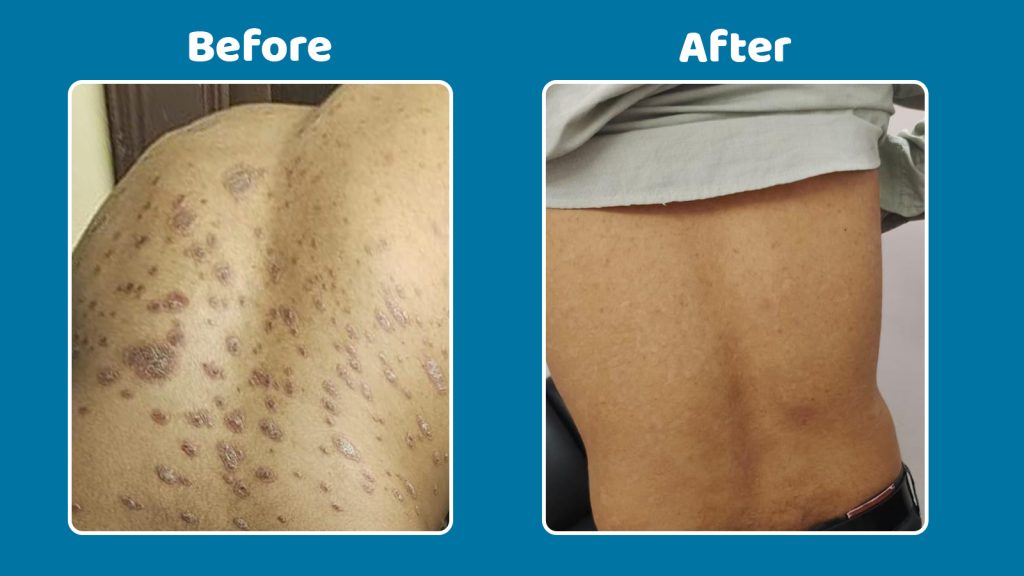
Image: Clear skin after treatment
Alt Text: Healthy skin after psoriasis treatment in Bangalore.
Bangalore-Specific Considerations
Bangalore’s unique environment influences treatment choice:
- Climate: Humidity and pollution can worsen psoriasis. Homeopathy’s soothing remedies (e.g., aloe vera-based) counteract irritation, while allopathy’s phototherapy is effective but requires clinic visits.
- Stress: Work pressure in tech hubs like Electronic City triggers flare-ups. Homeopathy’s holistic approach, including stress-relief remedies, aligns well with Bangalore’s yoga culture.
- Diet: Spicy foods and dairy, common in Bangalore, can aggravate symptoms. Both approaches recommend dietary changes, but homeopathy integrates personalized nutrition plans.
- Access: Bangalore has abundant homeopathic clinics in Koramangala and allopathic hospitals in Whitefield, making both accessible.
Combining Homeopathy and Allopathy: A Hybrid Approach
For some patients, integrating both treatments yields optimal results:
- Mild Cases: Start with homeopathy (e.g., Graphites for scaling) and use allopathic topicals (e.g., calcipotriol) for quick relief during flare-ups.
- Severe Cases: Use allopathy’s biologics for rapid control, then transition to homeopathy for maintenance and prevention.
- Consultation: Work with a Bangalore-based specialist to create a hybrid plan, ensuring no remedy interactions.
Patient Story: A 50-year-old from Indiranagar combined Sulphur homeopathy with UVB phototherapy, achieving 85% clearance in 4 months and sustained remission with ongoing homeopathic care.
Practical Tips for Choosing the Right Treatment
- Assess Severity: For mild to moderate psoriasis, try homeopathy; for severe cases, start with allopathy.
- Consider Lifestyle: If Bangalore’s stress or climate triggers your symptoms, homeopathy’s holistic approach may be better.
- Evaluate Budget: Homeopathy is cost-effective; allopathy’s advanced treatments may suit those with insurance.
- Consult a Specialist: Visit a Bangalore clinic to discuss your psoriasis type, triggers, and goals.
- Track Progress: Use a journal to monitor symptoms, triggers, and treatment effects.
- Incorporate Lifestyle Changes: Both approaches benefit from stress reduction (yoga, meditation) and an anti-inflammatory diet (avoid dairy, include turmeric).
Research on Homeopathy vs. Allopathy for Psoriasis
- Homeopathy: A 2025 Journal of Alternative Medicine study found 60% of patients reported reduced itching and scaling with remedies like Arsenicum Album, though results vary by individual.
- Allopathy: A 2025 Journal of Clinical Dermatology study showed biologics achieved 75-90% clearance in severe cases, with phototherapy effective for 70% of patients.
- Hybrid Approach: A 2024 Integrative Dermatology study noted 80% of patients combining homeopathy and allopathy achieved better long-term outcomes than either alone.
Which treatment is better for psoriasis: homeopathy or allopathy?
Allopathy offers faster relief for severe cases; homeopathy is safer and holistic for mild to moderate psoriasis
Choose the Best Path for Your Psoriasis
Deciding which treatment is better for psoriasis—homeopathy or allopathy—depends on your symptoms, lifestyle, and goals. Homeopathy offers safe, holistic care for long-term remission, while allopathy provides rapid relief for severe cases. Bangalore residents can benefit from either or a hybrid approach, tailored to local triggers like stress and humidity. Consult a psoriasis specialist to create a personalized plan that restores clear, healthy skin and confidence. Schedule a consultation today to explore your options and start your healing journey.
Internal Links:
Contact: Reach out to a trusted Bangalore clinic for expert care, available 7 days a week.